
September 15, 2026
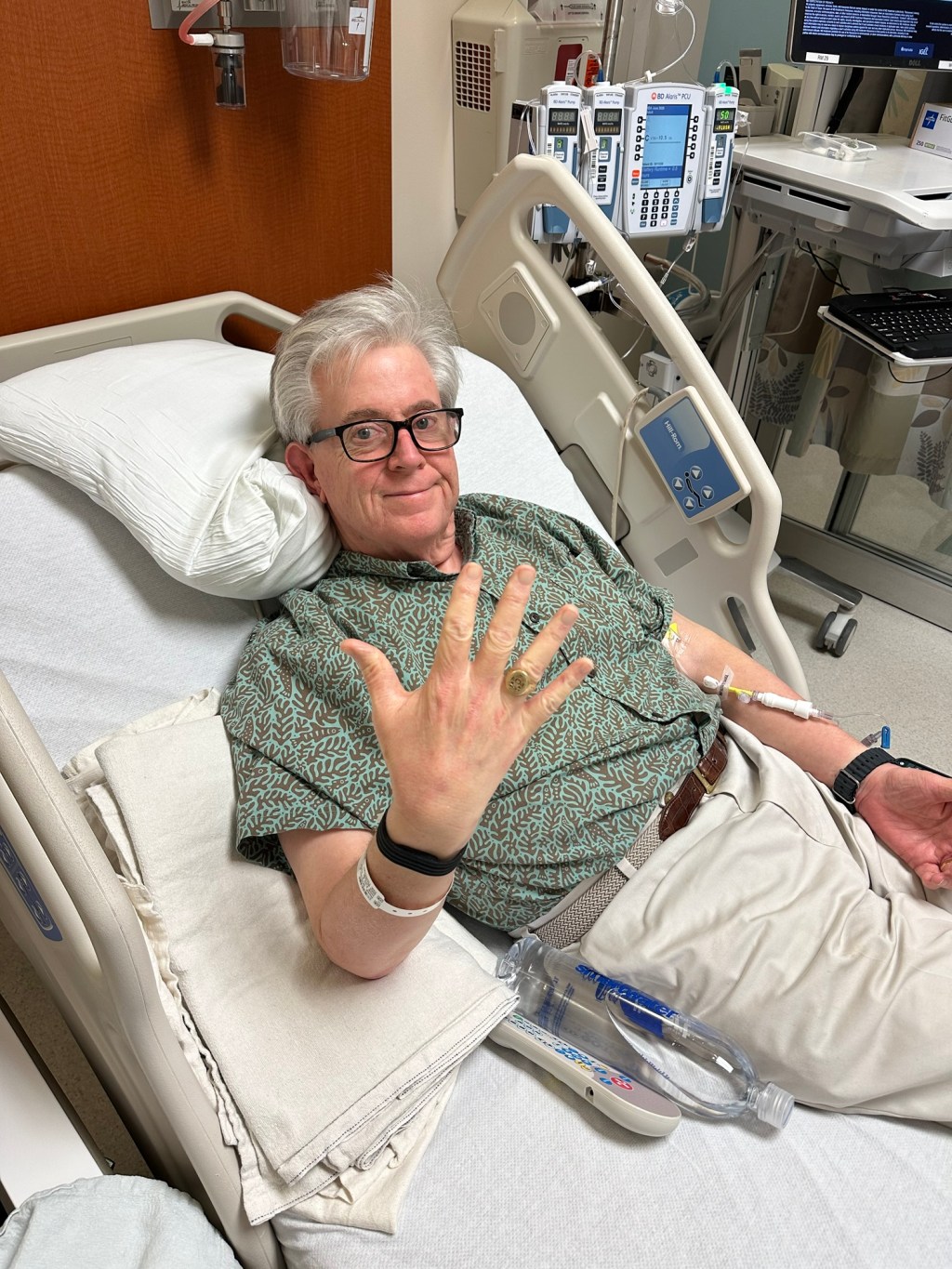
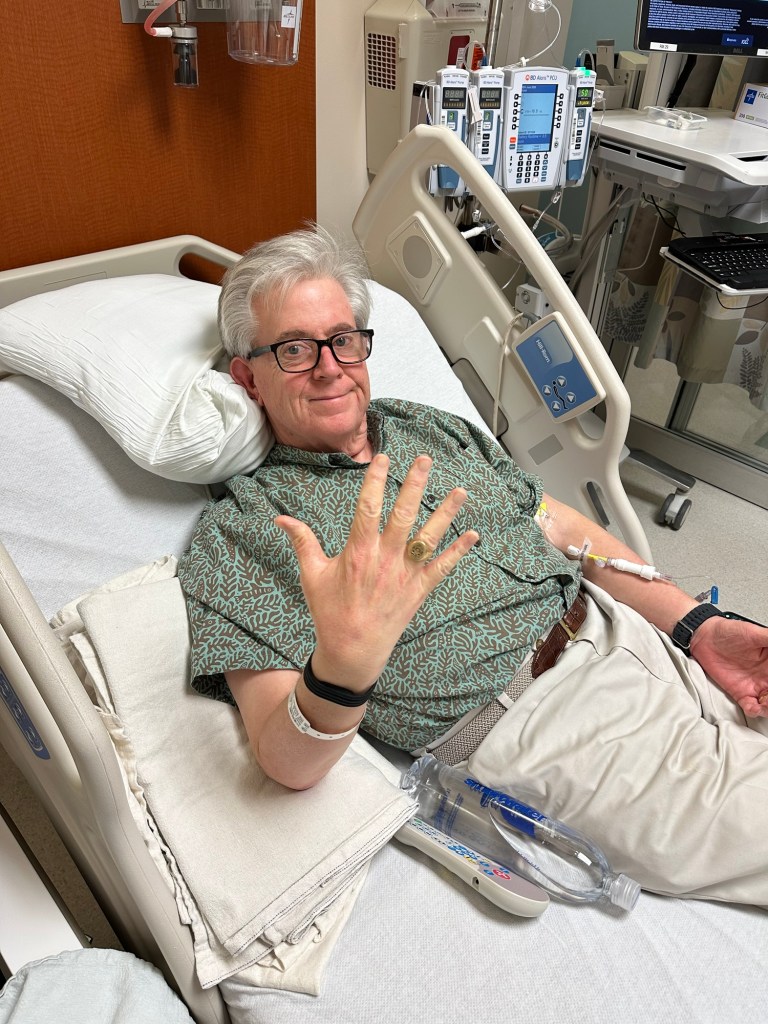
Today was mogamulizumab infusion number five—the last of the weekly treatments before the schedule changes to every other week.
The most encouraging part of today was how pleased my doctors seemed with what they are seeing.
The red bump on my back that appeared last week is gone. The other bumps are flatter. My rash continues to improve. At one point my doctor looked at the areas we had been following and said, simply, “They’re gone. A plus.”
Later she told me, “You look amazing.”
Those are pretty good words to hear in an oncology clinic.
I feel good overall, although I am somewhat tired. The diarrhea we have been watching is also considerably better—probably about 50 percent improved. I am now going roughly once to one-and-a-half times a day, and more than half the time there is at least some form to it.
There was one laboratory number I wanted to understand better. My platelet count has fallen again, this time to 132,000/µL. My doctor thinks this may reflect an immunologic reaction associated with my body lysing cancer cells, along with the effects of the large dose of steroids I received during the hospitalization gradually wearing off. She emphasized that we will keep watching it.
One particularly reassuring laboratory result was my LDH. Her description was memorable: “Your LDH is stone cold normal now.”
For now, the plan is simply to keep an eye on the blood counts and let the team know if anything changes.
I also asked about some mild neuropathy I have been noticing in my toes and the balls of my feet. My doctor said that is not typical of MOGA and that she would not expect it from the drug, particularly this early in treatment.
Another practical question was when—or whether—to restart Zepbound. I have been off it since before beginning MOGA. My endocrinologist suggested restarting at the lower 2.5 mg dose, but my oncology team wants me to wait until the next blood work. If everything remains stable, we can reconsider it then. The idea is not to change too many variables at once, especially with a couple of trips coming up.
We also revisited the timing of the next PET scan. I had seen January somewhere in the schedule, but that did not fit with my memory that we wanted to reassess after roughly three months of treatment. The plan now sounds much more like November, probably later in the month—about three months after starting MOGA—to see what is happening not only in the blood and skin but also in the lymph nodes and deeper areas of disease.
That brings me back to the question that is never very far away: stem-cell transplant.
I told my doctor that my mood is generally good, but I do have periods when the transplant decision weighs heavily on me. The choice can feel brutally stark when I let myself think too far ahead: do I accept the substantial risks of transplant, or the risks of living with Sézary syndrome without pursuing the one treatment that might cure it?
What my doctor said today helped.
We are continuing the transplant workup so that the option is available if and when we need it. But she does not think I need to make that decision today. We do not yet have all the data points. The three-month assessment should tell us much more about how completely MOGA is controlling the disease, including the disease outside the bloodstream.
So I can keep preparing without pretending I already know what I will decide.
That seems like a healthier place to leave the question for now.
Today also marks a small milestone. I have now finished the five weekly MOGA treatments. Assuming things continue as planned, I return in two weeks and begin the every-other-week schedule.
Five treatments ago, I was just beginning this drug without knowing how my disease—or my body—would respond. The first treatment landed me in the hospital. Since then, the infusions themselves have become almost routine, the malignant cells in my blood have fallen dramatically, my skin has improved, and the bumps we were watching are disappearing.
There are still important questions ahead, particularly what the PET scan will show and what I ultimately decide about transplant.
But today my doctor looked at the physical evidence of where we are and gave it a grade.
A plus.
I’ll take it.

