
Before my diagnosis, I had never heard the words “Sézary syndrome.” I suspect that is true for most people who suddenly find themselves searching for it.
Sézary syndrome is a rare form of cutaneous T-cell lymphoma, or CTCL. Despite the word “cutaneous,” it is not simply a skin disease. It involves abnormal T lymphocytes—a type of white blood cell—and can affect the blood, skin and lymph nodes.
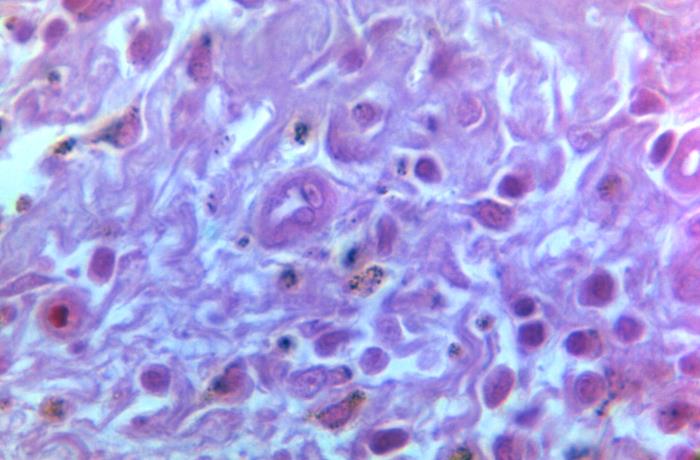
What a Sézary cell looks like
One characteristic feature pathologists may see is a malignant T cell with an unusually folded, brain-like — or “cerebriform” — nucleus. No single microscope image makes the diagnosis by itself; it is one piece of a larger picture that can include examination of the skin, biopsies, blood studies and other testing.
Why it can be confusing
Many of the early symptoms can resemble much more common skin conditions. Itching, redness, scaling and widespread rash do not automatically suggest lymphoma, which helps explain why the road to diagnosis can involve dermatologists, allergists and other specialists before hematology or oncology enters the picture.
The diagnosis can draw on several kinds of evidence rather than one simple test: examination of the skin, skin biopsies, blood counts and flow cytometry, molecular testing, imaging and sometimes lymph-node or bone-marrow biopsies. In my own case, understanding what was happening required putting together findings from several of those sources.
The language I had to learn
Terms such as CTCL, malignant T cells, flow cytometry, T-cell receptor rearrangement, PET SUV, nodal involvement and staging quickly became part of conversations that would have been almost unintelligible to me a few months earlier. I have now gathered many of those terms into a patient-oriented Glossary of Sézary Syndrome & CTCL Terms, including staging, blood involvement, tests, treatments and transplant vocabulary.
Important: This section is meant to help readers understand my experience and the terminology surrounding it. It is not medical advice, and it should not substitute for information from a qualified medical team.

