
This is the day-to-day record—the part of the site where the story unfolds in real time rather than in hindsight.
I use these entries for the things that are easy to lose when months of medical care begin to blur together: what a doctor said, how I felt before and after a treatment, what frightened me, what reassured me, what surprised me, and what life looked like on the days when cancer was not the only thing happening.
Some entries may be carefully written. Others may begin as notes made after an appointment or a transcript from a conversation and be cleaned up later. I want the record to remain close to what I actually experienced at the time, including occasions when later information changes what I thought I knew.
What will appear here
- Doctor visits and what I took away from them
- Treatment days and side effects
- Changes in symptoms and skin
- Scans, biopsies and important test results
- Decisions about treatment and transplant
- Personal notes about family, friends, fear, hope and ordinary life
As the journal grows, the dated entries will become the backbone of this site and will link to the more organized sections on treatment, transplant and the disease itself.
Jump to a Journal Entry
The journal itself runs from oldest to newest. This index runs newest first so returning readers can quickly find the latest entries.
October 2026
September 2026
- September 29 — Marching Firmly in the Right Direction
- September 15 — Infusion #5 — A Plus
- September 8 — Infusion #4 — The Blood Tells the Story
- September 2 — Infusion #3, Questions, and the Night Demons
August 2026
- August 28 — Another Check Mark Toward Transplant
- August 25 — MOGA Treatment #2: An Uneventful Second Infusion
- August 22 — Recovering at Home
- August 21 — Going Home
- August 20 — A Long Night of Fever, Antibiotics and Heart Monitoring
- August 19 — Fever and an Unexpected Return to MD Anderson
- August 18 — First Infusion Day
- Getting My Affairs in Order Before Treatment
August 2026 — Getting My Affairs in Order Before Treatment
By the time my first treatment was approaching, months of appointments, tests, biopsies, scans and difficult medical decisions were already behind me. But there was another kind of preparation I felt I needed to make before treatment began.
One of the less obvious parts of preparing for cancer treatment had nothing to do with blood tests, scans, medications or hospital appointments.
Before treatment began, I decided it was time to make sure my legal and financial affairs were in order.
That meant updating my will, reviewing and changing life-insurance beneficiary information where necessary, completing a Directive to Physicians, establishing a Medical Power of Attorney and putting a Durable Power of Attorney in place.
None of this was particularly pleasant to think about.
There is something sobering about sitting across from an attorney and discussing who should make decisions for you if you cannot make them yourself, what should happen to your property after you die, and what kind of medical care you would or would not want if you became seriously ill and could no longer speak for yourself.
Those conversations feel different when you have recently been told that you have cancer.
At the same time, I did not do any of this because I believed I was about to die. I was preparing to begin serious treatment for a serious illness, and it seemed irresponsible to leave important decisions unresolved when I was perfectly capable of making them myself.
My goal was actually quite simple: if something unexpected happened, I did not want my wife to have to guess what I wanted or struggle through unnecessary legal or financial complications while also dealing with a medical crisis.
The Medical Power of Attorney identifies who I want making healthcare decisions if I become unable to make them. The Durable Power of Attorney provides authority to handle financial and other practical matters if I cannot. The Directive to Physicians records my wishes regarding medical treatment under certain end-of-life circumstances. And the updated will makes sure my estate reflects what I want today rather than decisions made years ago under very different circumstances.
I also reviewed beneficiary designations because a will does not necessarily control assets such as life insurance and certain financial accounts. Those designations need to be reviewed separately.
There was an emotional side to all of this that I had not anticipated.
Signing documents that contemplate your incapacity or death forces you to think about possibilities most of us are very good at postponing. Cancer simply made it harder to postpone them.
But once everything was completed, I felt considerably better.
The decisions had been made. The documents existed. My wife knew what I wanted. And instead of carrying those unfinished matters around in the back of my mind while beginning treatment, I could turn my attention back to the immediate job in front of me: getting better.
If there is one thing I would pass along to someone else who has recently received a serious diagnosis, it is that getting these documents in place is not an admission of defeat.
Quite the opposite.
It is an act of preparation and, in many ways, an act of care for the people who may someday have to make difficult decisions on your behalf.
And the truth is that none of us should really need a cancer diagnosis to do it.
✉︎ Follow the Journey | ↑ Back to Top
August 18, 2026 — First Infusion Day
Morning notes — written before the day’s appointments.
I went to bed by 9:00 last night, but sleep did not last long. I woke around midnight itching and scratching, then slept on and off until I finally got up at 5:20 this morning.
I took a warm bath and stayed there until about 7:00, catching up on the news and email and simply relaxing in the water. There is a lot of anticipation this morning. Today is the day treatment actually begins.
Before heading to MD Anderson, the morning still has some ordinary life in it. I need to drop my wife’s car at the neighborhood gas-station mechanic for routine service, and at 9:45 I have a Zoom meeting with the investment committee of the Kiwanis Foundation of Houston, where I serve.
I had been elected to become president of the Foundation beginning in October for a three-year term. I have resigned from that office because there is simply too much uncertainty right now about my health and about what I will realistically be able to take on. It was not an easy decision, but it was the responsible one.
Then the medical part of the day begins: blood work, an appointment with my dermatologist, and my first mogamulizumab infusion.
I plan to keep good notes, take some photographs, and use my Plaud recorder so I have a better record of what is said and what the experience is actually like. I will add to this entry after the appointments and the infusion.
Later that day — the first dose
After the blood work and dermatology visit, I received Tylenol and Benadryl as premedication and then started the mogamulizumab infusion.
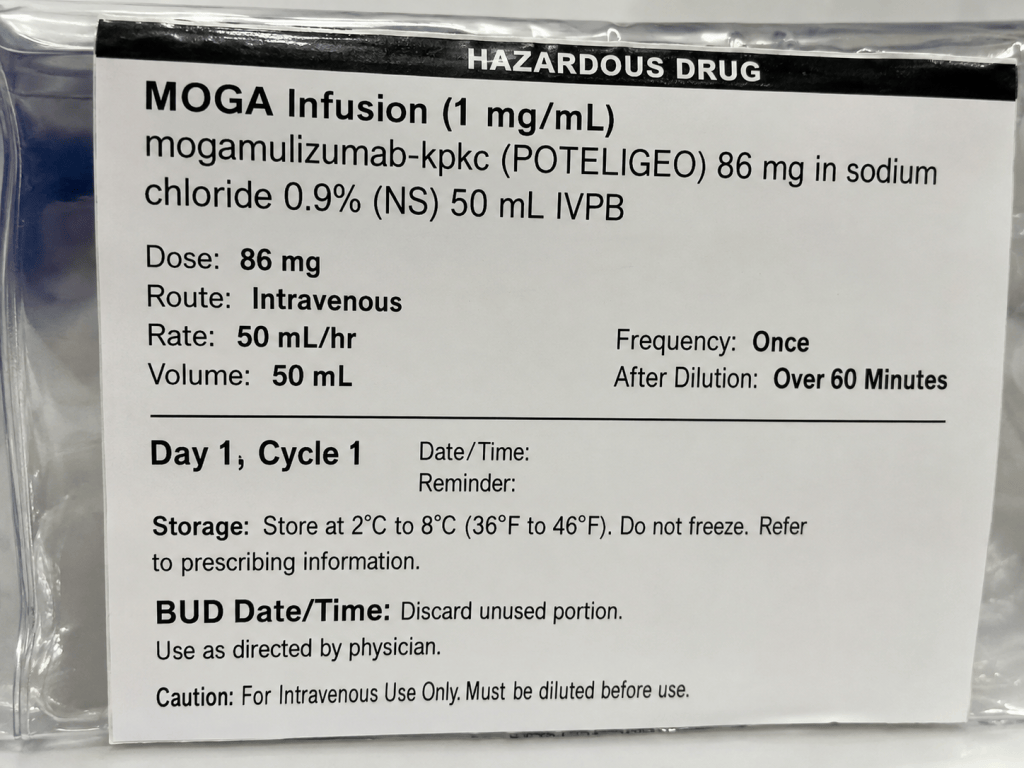
About a third of the way through, I became flushed and suddenly felt dizzy and almost drunk. The infusion was stopped while the symptoms settled. Once I was feeling better, they restarted it at a slower rate.
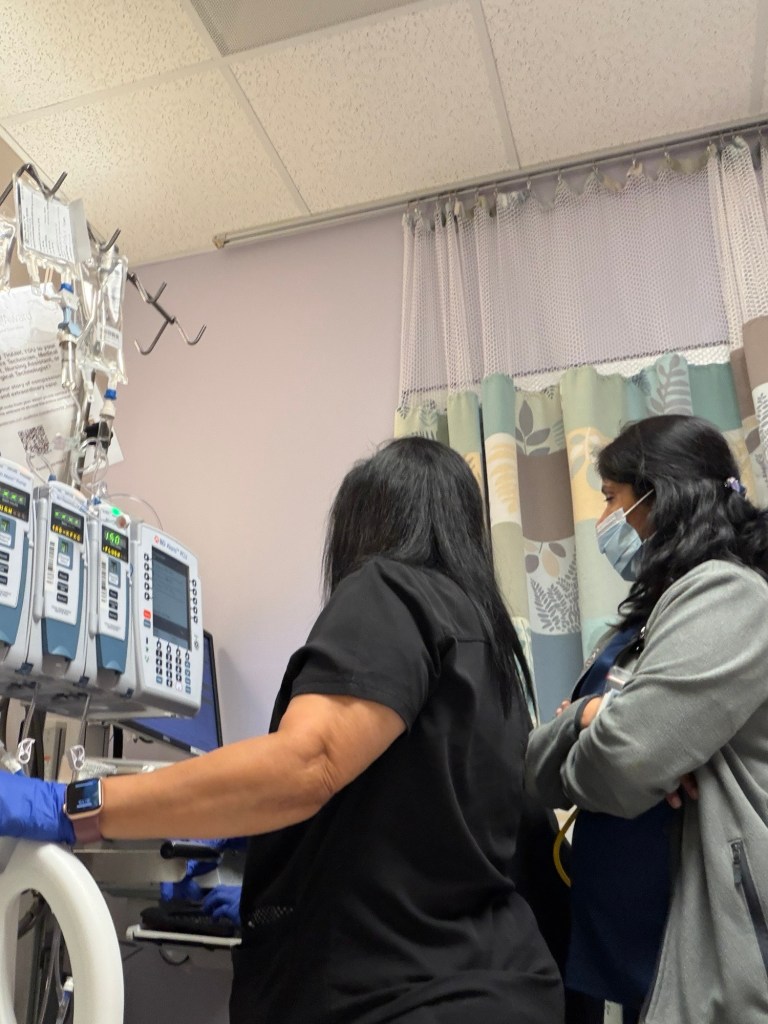
I was able to finish the full dose and complete the observation period afterward. It was not the perfectly uneventful first treatment I had hoped for, but I did finish it, and that mattered to me.
I went home thinking the difficult part of the day was probably behind me. I had no idea that the next day would bring me back to MD Anderson.
✉︎ Follow the Journey | ↑ Back to Top
August 19, 2026 — Fever and an Unexpected Return to MD Anderson
I woke up the morning after the infusion feeling surprisingly fine. As the day went on, however, I became increasingly lightheaded and dizzy. At first dehydration seemed like a reasonable explanation, so I concentrated on drinking fluids.
Then the temperature started climbing. I developed chills and eventually a fever above 102°F. After talking with my MD Anderson team, I was sent to the Acute Cancer Care Center rather than the emergency room.
They gave me IV fluids and began a broad workup: blood tests, blood cultures, urine testing, respiratory testing, a chest X-ray and an EKG. At that point nobody could say with confidence whether this was dehydration, an infection, a delayed reaction to mogamulizumab, or some combination of things.
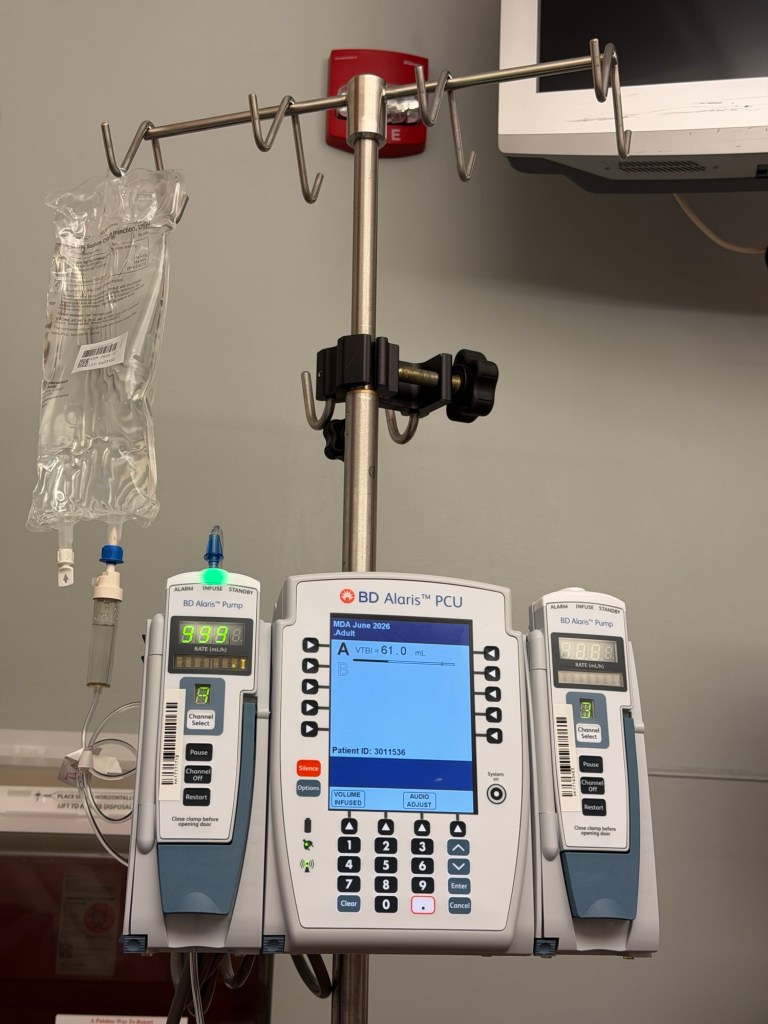
Because the fever persisted and I had just started cancer treatment, I was moved into the hospital’s observation unit. What had begun as a day at home recovering from my first infusion had turned into an overnight hospital stay.
✉︎ Follow the Journey | ↑ Back to Top
August 20, 2026 — A Long Night of Fever, Antibiotics and Heart Monitoring
The fever continued overnight and again reached about 102°F. Blood cultures were still pending, so the medical team had to treat infection seriously even though there was not yet a clear source.
I received IV antibiotics and steroids while the team continued watching the cultures and the rest of the laboratory results. My heart rate also dropped into the upper 40s several times. I was on continuous monitoring, and another EKG was done. The conduction abnormality seen on the tracing was not new, which was reassuring, but seeing a heart rate in the 40s still got my attention.
There were smaller symptoms too — congestion for a while and soreness in the muscles around my jaw — but the fever and the uncertainty were the main story.
Emotionally, one of the hardest parts was wondering what all of this meant for MOGA. I had put a lot of hope into finally starting treatment, and I did not want the first dose to become the reason I could not continue it.
By later in the stay, the fever was beginning to settle and there still was no obvious sign of infection on the early testing.
✉︎ Follow the Journey | ↑ Back to Top
August 21, 2026 — Going Home
I made it through the night without another fever. The blood cultures continued to show no growth as they approached the 48-hour mark, and I was feeling considerably better.
There were still things to watch. My platelet count had dropped, and the team wanted my primary MD Anderson doctor to weigh in before I left. They also wanted me to follow up with my cardiologist about the episodes of slow heart rate and the EKG findings.
Later that day I was able to go home. After several days of fever, monitoring, blood draws and uncertainty, sleeping in my own bed sounded unusually good.
I also spoke with my doctor’s PA about what all of this meant for the next dose of MOGA. Her recommendation was to proceed with the second infusion as scheduled, with additional medication beforehand to help reduce the chance or severity of another infusion reaction. She also told me that the second infusion often goes better than the first as far as reactions are concerned.
So, unless the team changes its recommendation before Tuesday, we are a go for infusion number two.
One encouraging piece of the laboratory picture was how sharply the circulating lymphocyte count had fallen after the first treatment. That is far too early to declare success, but it was at least a reminder of why I wanted to get through this first difficult week and keep moving forward if the doctors believe it is safe to do so.
✉︎ Follow the Journey | ↑ Back to Top
August 22, 2026 — Recovering at Home
I slept for roughly twelve hours after getting home and still woke up feeling pretty wiped out. One new surprise was my weight. I had been around 185 pounds for months, but this morning two different scales put me at about 196.
That understandably got my attention after several days of IV fluids in the hospital. I contacted my MD Anderson team, and my dermatologist on call also spoke with my primary doctor. Their feeling was that the hospital fluids could explain much of the sudden gain, and they were not overly concerned based on how I was doing. We will talk more about it when I am seen again Tuesday.
I also sent one of the EKG printouts to my cardiologist and mentioned the low heart rates. His office replied that the tracing did not show any new issue for me and noted that my heart rate at a previous office EKG had been 51. That was reassuring to hear.
Best of all, I have felt progressively better as the day has gone on. I am still recovering, but at the moment this feels more like recovery from a rough first treatment week than the beginning of another setback.
Another encouraging change today is that my rash appears noticeably reduced. I was hesitant even to mention it because it seems awfully soon after only one MOGA infusion, but my wife independently noticed the same thing while checking my back for areas that might need steroid cream. I do not know whether this represents an early treatment response, the effect of the steroids I received in the hospital, or simply a temporary improvement, but it is significant enough that I want to record it.
As things stand now, I am scheduled to return Tuesday for infusion number two, with additional premedication planned to reduce the risk of another reaction. Unless my team changes course before then, we are moving ahead.
August 25, 2026 — MOGA Treatment #2: An Uneventful Second Infusion
Today was a full medical day: an echocardiogram, pulmonary-function testing, blood work, a visit with my MD Anderson team and, if everything looked good enough, my second mogamulizumab infusion.
The first reassuring news came from the transplant testing. I was told I did “excellent” on the pulmonary-function test. By the time I met with my oncology team, they had also reviewed the echocardiogram. They described it as essentially perfect: good pumping function on both the right and left sides of the heart, normal-looking valves and nothing that appeared worrisome.
That was especially good to hear after everything that happened last week. My weight had jumped from about 185 pounds before the first infusion to roughly 196½ after several days of IV fluids. This morning I was back down around 189 at home. My doctor also explained that the BNP blood test that had been elevated in the hospital — a number that can rise with fluid overload or heart failure — had fallen back to roughly the 50s. She was very clear that I do not have heart failure. Her view was that the temporary rise in weight and BNP fit with the amount of IV fluid I had received while my body was also dealing with the inflammatory reaction to treatment.
The EKG findings that caused some concern during the hospital stay were also described as old rather than new. Between that, the normal echo and the falling BNP, a lot of the cardiac uncertainty from last week was put to rest today.
My blood counts had recovered nicely as well. Platelets, which had fallen to 84 in the hospital, were back up to 157. Hemoglobin had returned to 12.9. My doctor said things had not merely stabilized; they had reversed in a pretty robust way.
The rash remains dramatically better than it was before treatment, although a little of it began to return last night. The team pointed out that the IV steroids I received in the hospital probably contributed to how completely it disappeared, so it is too early to know how much of the improvement came directly from MOGA. Still, even with the mild return, I am much less pink than I was before the first infusion.
We also talked in more detail about the extraordinary drop in my circulating lymphocytes after the first dose — roughly 97 percent by the numbers I had been watching. I asked whether those disappearing lymphocytes were all cancer cells. The answer was “mostly bad, but a mixed bag.” My team discussed the possibility that the very strong fever-and-inflammatory reaction I experienced may have been related to such a rapid effect on the malignant lymphocytes, somewhat like a tumor-lysis-type response. They were careful to frame that as their working explanation rather than something that had been definitively proven.
They also want another flow-cytometry test soon so we can look directly at the malignant T-cell population rather than trying to draw conclusions from the total lymphocyte count alone.
The central question, of course, was whether to give me dose number two today or wait another week. My doctor said that if you asked a large group of specialists, opinion might split about fifty-fifty after a first week like mine. I had spent several days in the hospital, and my reaction had been stronger than what they usually see.
After reviewing the echo, pulmonary testing, blood counts, my recovery from the hospital stay and how I looked and felt today, my doctor told me, “I have no medical reason not to treat you today.” She was comfortable proceeding if I was.
I was.
One thing we will not do routinely is give extra IV fluid after the infusion. Because I became so fluid overloaded last week, my doctor would rather avoid that unless there is a specific reason I need it.
We also have a clearer plan if fever returns. If I am febrile tomorrow, they want to hear from me. That does not automatically mean another hospital stay, but because my blood counts dropped so sharply last time, they may want repeat labs and could use the urgent symptom clinic for fluids, blood work or steroids if necessary.
Tomorrow I also have the social-work portion of the transplant evaluation. The pulmonary test and echocardiogram were two of the major medical pieces of that process, so having both come back reassuringly normal feels like another small box checked on a much longer road.
I came into today ready to continue treatment if the doctors believed it was safe. After last week, I needed reassurance that the heart findings, fluid gain and blood-count changes had not created some new obstacle. Instead, most of those issues have moved in the right direction.
Later that day — infusion number two
There was a delay getting the MOGA from the pharmacy, but once the infusion began, it was almost remarkably uneventful — exactly what I had hoped for.
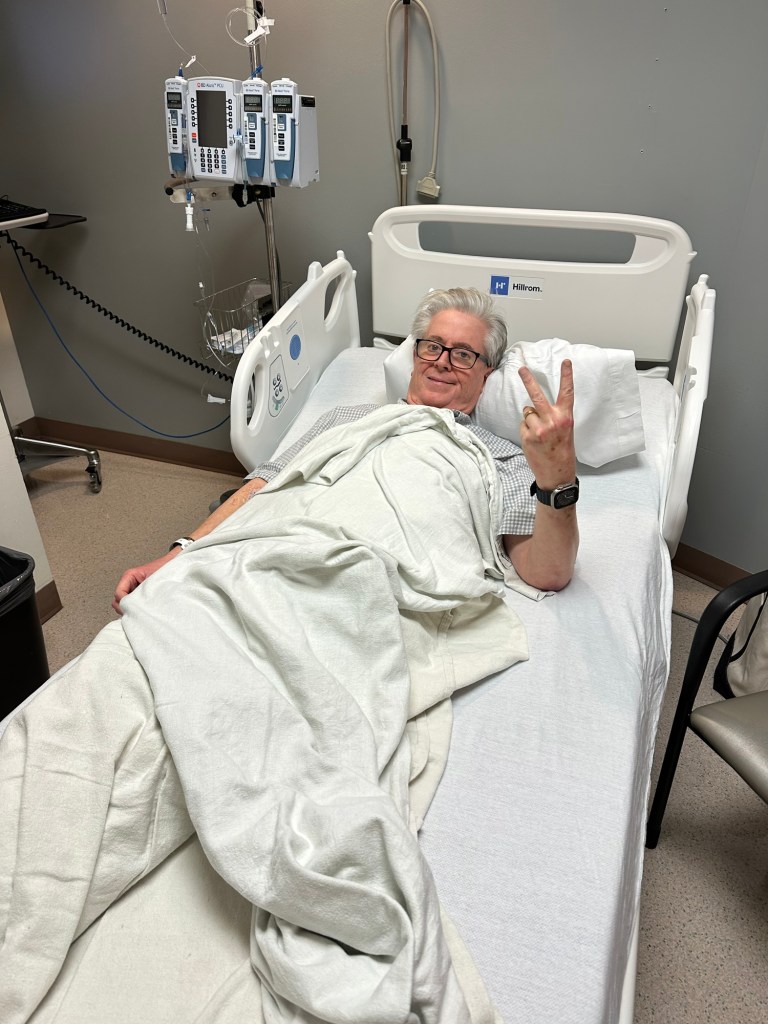
The premedications and infusion procedure were essentially the same as before. This time there was no flushing, dizziness, fever or other obvious infusion reaction. I completed the full dose and then stayed for the required one-hour monitoring period. Nothing happened there either.
My systolic blood pressure reached 133 at one point, which is higher than normal for me, but after the experience of the first infusion I was understandably anxious. Otherwise, the monitoring period was uneventful and I was cleared to go home.
The ride home was fine. By evening I was back at home, the dogs were fed, and I was sitting down with a non-alcoholic beer while watching the news, with meatballs and mashed potatoes waiting for dinner.
I was relieved, but still cautious. After the first infusion, the serious fever and illness had not developed until the following day, so I wanted to see that same period pass before declaring treatment number two completely uneventful.
It did.
The delayed reaction I had been watching for never materialized. Infusion number two came and went without a repeat of the fever, hospitalization or other problems that followed the first dose.
After the drama of treatment number one, having nothing much happen after treatment number two felt like very good news indeed.
August 28, 2026 — Another Check Mark Toward Transplant
Today I followed up with my lymphoma oncologist on a question that had been bothering me after looking more closely at some of my pathology results.
My bone marrow chromosome analysis had come back with what the report called a “complex karyotype.” In plain English, the malignant cells showed multiple chromosome abnormalities rather than one isolated genetic change. The report included losses, deletions and rearrangements involving a number of chromosomes.
That caught my attention because I knew that in some blood cancers, particularly leukemia, a complex karyotype can carry a worse prognosis. So my question to my lymphoma oncologist was essentially: Does the complex karyotype found in my bone marrow tell us anything more about how aggressive my particular Sézary syndrome is, or about my prognosis—and should it influence the decision about whether I ultimately pursue a donor stem cell transplant?
His answer was interesting, and in some ways reassuring.
He explained that, unlike in some leukemias, these kinds of chromosome abnormalities in T-cell lymphoma do not currently give doctors a great deal of useful additional prognostic information. There simply isn’t enough research showing that a particular abnormality—or even this complex collection of abnormalities—means that a patient with Sézary syndrome will necessarily do better or worse.
In other words, the complex karyotype wasn’t another piece of bad news that suddenly changed my prognosis.
But then he came back to the larger issue.
Sézary syndrome is considered an incurable disease with the treatments we currently use to control it. Drugs like mogamulizumab can hopefully put the disease into remission and keep it under control, perhaps for a meaningful period of time, but they aren’t expected to eliminate it permanently.
The one treatment that potentially changes that equation is an allogeneic stem cell transplant—replacing my blood-forming and immune system with healthy donor cells.
I’ve heard that before, of course. We’ve been talking about transplant for weeks now. But somehow hearing my lymphoma oncologist explain it again in the context of this particular question made it register a little differently.
I keep mentally making two columns.
There are certainly check marks in the column that says, This is a very serious undertaking.
There are risks. There is the possibility of graft-versus-host disease. There are months of preparation, treatment and recovery. There will be a period when I won’t be living at home. And the idea of essentially replacing my immune system with someone else’s is, when I allow myself to really think about it, somewhat scary.
I’m not pretending otherwise.
But there is another column too.
My disease is incurable with conventional treatment.
I am otherwise healthy enough that transplant is being seriously considered.
We’re already beginning the donor-search and evaluation process.
And transplant offers something none of the other treatments can honestly offer me: the possibility of a cure.
Today’s conversation added one more check mark to that column.
It doesn’t mean I’ve made some dramatic final decision today. There are still many things that have to happen first. The mogamulizumab has to do its job. I need to get the disease into the best remission possible. A suitable donor has to be found. My doctors and I will have to decide whether the potential benefit outweighs the very real risks when we actually reach that point.
But when I ask myself why I would willingly go through something as intimidating as a donor stem cell transplant, the answer is becoming increasingly clear.
Because if I am fortunate enough to get the opportunity, it may be my one chance to do more than simply keep this disease under control.
It may be my chance to get rid of it.
And today, that possibility got one more check mark.
September 2, 2026 — Infusion #3, Questions, and the Night Demons
5:55 a.m.
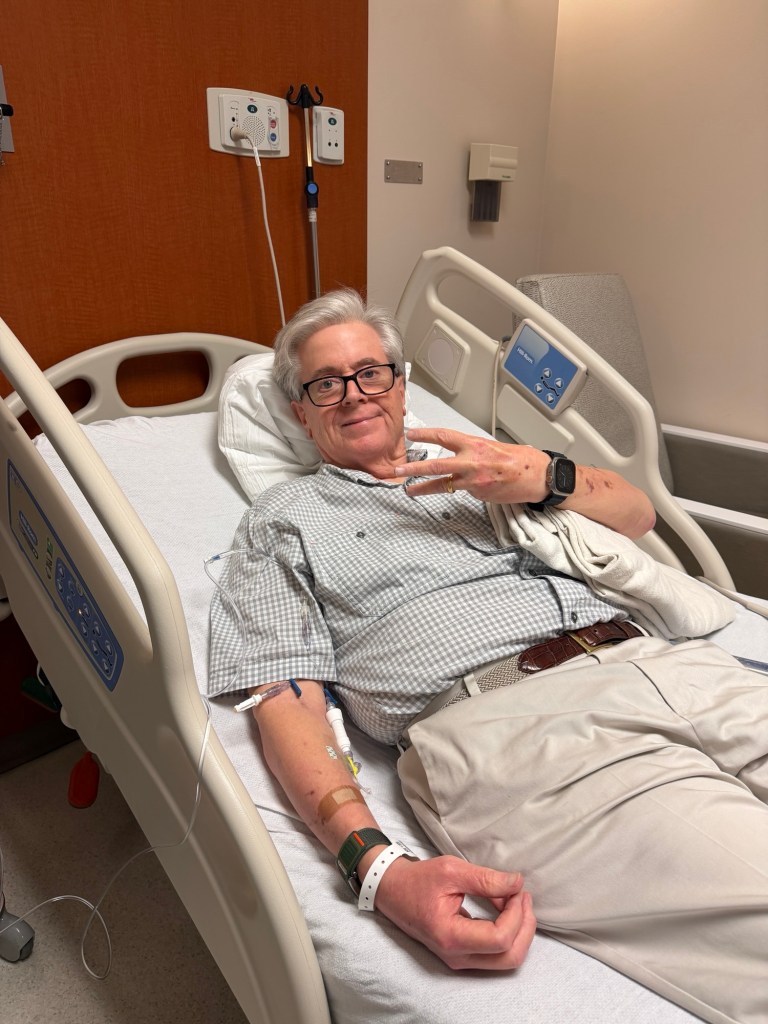
I’ve been awake since about 3:30 this morning, thinking back over yesterday — the doctor visit, my third MOGA infusion, and especially one small part of the examination that seems much bigger in the middle of the night than it did during the day.
Before the doctor came in, I spent quite a bit of time talking with the PA and asking some of the questions that have been building up since treatment started.
A lot of my questions were about what happens from here. How and when will we really know how well MOGA is working? What will determine the next treatment step? How soon do we start thinking seriously about what comes after MOGA, including radiation and ultimately a possible stem-cell transplant?
The answer I heard repeatedly, in one form or another, was that it is still very early. There simply isn’t enough information yet to know what the next treatment steps will be. Right now the job is to continue MOGA, watch how my blood and skin respond, follow the disease over time, and make those larger decisions when we actually have enough information to make them intelligently.
As I understand it, the current MOGA treatment plan is five weekly treatments, with the fifth beginning the shift into every-other-week treatment. After that, treatment continues every two weeks for up to about six months unless remission comes sooner. Flow cytometry will be checked every couple of months to monitor what is happening in the blood, and a repeat PET scan is expected at around the three-month mark to see how the lymph nodes and other areas are responding.
That is not an entirely satisfying answer when you want to know where the road leads, but it is probably the only honest answer at this point.
We also talked about some of the more immediate things I have been watching — the remaining skin issues, my occasional low overnight oxygen readings, and some gastrointestinal problems — along with the testing and monitoring that have now become part of everyday life.
Then the doctor came in and examined me.
Most of the visit was reassuring. But there was one moment that has stayed with me.
While examining the left side of my neck, she felt something that concerned her enough to wonder whether there could be a mass pushing outward from behind the muscle. She did not say that there was a new growth, and I still think what she was feeling may simply have been a very tight muscle.
But she was concerned enough to tell me to monitor the area and contact her if I begin to feel a lump there.
That instruction is probably the best measure of how seriously I am taking it. I don’t think there is necessarily anything there. I certainly don’t know that there is. But it was enough of a question in her mind that she wanted me watching it, and that makes it difficult to completely dismiss.
After the appointment came Infusion #3.
And thankfully, that part of the day was almost uneventful — exactly what I wanted.
The infusion went fine. In fact, I think I felt better afterward than I did after the second infusion. No repeat of the ordeal that followed Infusion #1. I was able to leave, go home, have dinner, and go to bed feeling pretty good.
My good friend Mark picked me up and drove me home. He stayed for a couple of hours, and we did what old friends do — sat around and talked. Just good old-friend conversation. There is something wonderfully normal about that in the middle of something that is anything but normal.
Andrea is in Boston on business, so she wasn’t here yesterday. She gets home Wednesday night, which I am looking forward to.
So, taken as a whole, yesterday was actually a pretty good day. The treatment went well. I felt good afterward. I had dinner, enjoyed time with an old friend, and went to bed.
And maybe that is worth emphasizing.
After what happened following the first infusion, an uneventful treatment day now feels like real progress. Infusion #2 was much easier than the first, and Infusion #3 seemed easier still. The routine is beginning to feel more familiar: blood work, questions, doctor visit, infusion, home.
Not every treatment day needs a dramatic development. Sometimes a good cancer-treatment day is simply one in which nothing bad happens.
I’ll take that.
Then 3:30 a.m. arrived.
That is when the mind starts going back through the day and chooses the one unresolved thing to work on.
The left side of my neck.
At 3:30 in the morning, uncertainty has a way of becoming much larger than it is in daylight. These are the “night demons” — when the concerns of the day are magnified and the mind starts supplying frightening answers to questions that medicine hasn’t answered.
This morning I am trying to keep the facts separate from the fears.
The doctor felt something that she wants me to watch.
There is no confirmed new growth.
It may simply be a tight muscle.
I will monitor it exactly as she asked and let her know if I feel a lump developing.
And until there is evidence that tells me otherwise, I am going to try very hard not to let a possibility become a certainty just because it is 3:30 in the morning.
September 8, 2026 — Infusion #4 — The Blood Tells the Story
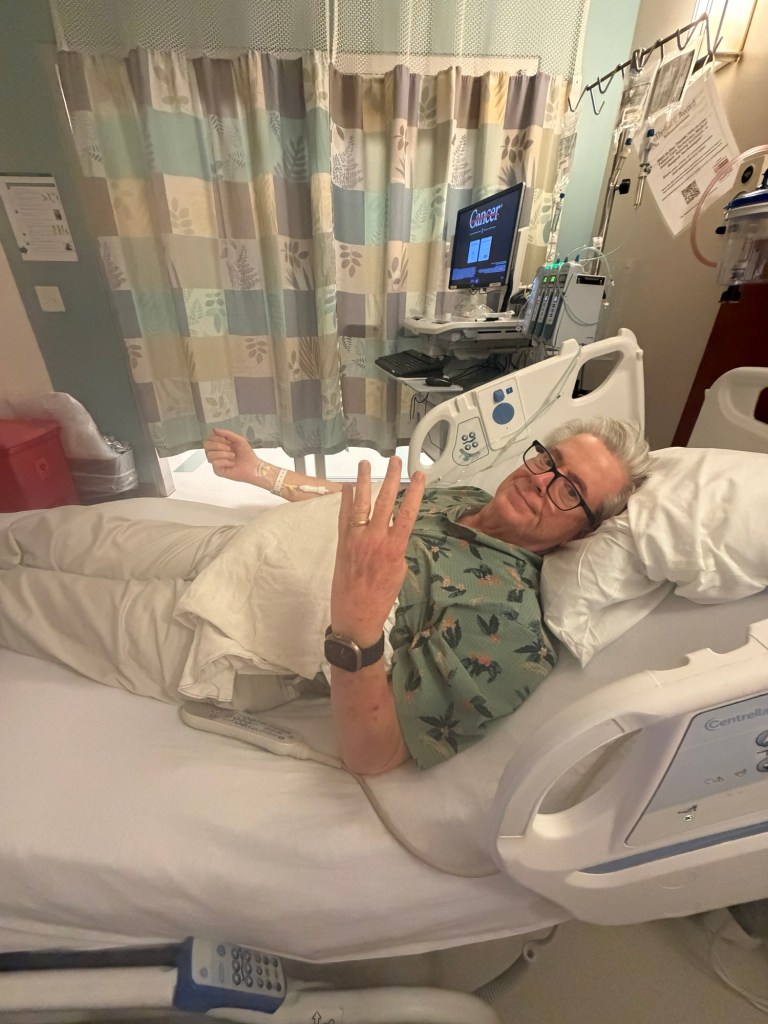
Today was mogamulizumab infusion number four.
And for the first time since this whole process began, I walked into treatment with something more than hope that the drug was working. We now have some pretty remarkable evidence.
My latest flow cytometry—the test that actually looks at the abnormal T-cells circulating in my blood—showed that the cancer cells in my blood are now almost gone.
After only two infusions.
When the result first appeared, I looked at the numbers myself and thought they were extraordinary. I sent a message asking whether I was reading them correctly. The response from my team was essentially: yes, you are. The flow cytometry looks much better. This is great.
Considering where we started—with substantial Sézary cells circulating in my blood—the fact that MOGA has reduced them so dramatically and so quickly is about as encouraging a treatment response as I could have hoped for.
The visible evidence is almost as striking.
My skin looks dramatically better. Most of the widespread redness and rash that covered so much of my body before treatment has disappeared. Normal-looking skin has returned over large areas. My doctor looked at me today and said, simply:
“You look so much better.”
She was right.
There are still a few odd spots. I have some circular areas on my abdomen that I had assumed were fungal because steroid cream seemed to make them worse and antifungal cream seemed to improve them. My doctor isn’t convinced they are fungal at all.
Then Andrea discovered something completely new while we were waiting for the doctors—a bright red raised bump on my back that neither of us had noticed before.
Fortunately, it looked like it may simply be a bug bite, complete with a tiny puncture point in the center. We had been at the farm over the weekend, so that theory certainly fits.
They photographed it. I’m supposed to use topical steroid and watch it. If it doesn’t go away, they’ll biopsy it.
There was another encouraging physical finding today. Last week there had been some concern about an area in my neck that felt unusually firm. Today it seemed softer and less stiff. Nobody could feel the small nodule we had discussed before.
That raises the question I keep asking: we can see that the treatment is working spectacularly well in my blood and skin—but is it also reaching the lymphoma in the lymph nodes and deeper tissue?
The answer today was:
Probably.
We won’t really know until the follow-up testing, particularly the PET scan, but the signs so far are encouraging.
My laboratory results were also good enough that there was no concern about proceeding with treatment. My white blood cell count remains low, but my neutrophil count was 2.23, still in the normal range.
I also asked about a guys’ trip to Aspen with my Breakfast Club that is planned for early October. I wanted to know whether flying and being around people should concern me while I’m on treatment.
The explanation was reassuring. MOGA changes the immune system, but I am not currently neutropenic. The important thing is that if I do get sick, I shouldn’t sit around for several days hoping it will resolve on its own. My medical team wants a lower threshold for evaluating and treating infections while I’m on MOGA.
So for now, Aspen is still on the calendar.
There is one side effect we are watching more closely now.
Apparently, if I’m going to write honestly about cancer treatment, I don’t get to share only the impressive blood-test results. I also have to report the less glamorous details of how often I’m going to the bathroom. So here we go.
I have continued to have diarrhea two or three times a day. I had blamed it on stool softeners, but I stopped those about ten days ago and the diarrhea has continued. Diarrhea is also a known side effect of MOGA, so we are watching it more carefully.
For now, they are comfortable watching it. But if it increases to around four times a day and stays there, I’m supposed to call rather than waiting for my next appointment because MOGA can sometimes cause inflammation of the colon.
One of the nicest parts of the day was lunch with an old fraternity brother who has been in Houston from Los Angeles for treatment for more than a year. It was good to sit together in the middle of a hospital day and simply catch up as old friends.
Otherwise, I feel surprisingly good.
A little tired, perhaps—maybe ten percent below normal—but no fever, chills, night sweats, or reaction to the last infusion.
My mood is good too.
So today we proceeded with infusion number four.
Next week is number five.
After that, assuming everything continues to go well, the weekly treatments end and MOGA moves to every other week.
There is still a long road in front of us. We still have to find out how completely the disease is responding outside the bloodstream. The transplant question hasn’t gone away.
But today deserves to be recognized for what it was.
A few weeks ago, approximately 90% of the T-cells circulating in my blood were malignant Sézary cells.
Now, after only a handful of treatments, those cancer cells are almost gone from my blood, my skin looks remarkably better, and even my doctors seem genuinely impressed by how quickly I have responded.
I have learned not to get too far ahead of myself with this disease.
But when there is good news, it is okay to stop for a moment and appreciate it.
Today was good news.
September 15, 2026 — Infusion #5 — A Plus
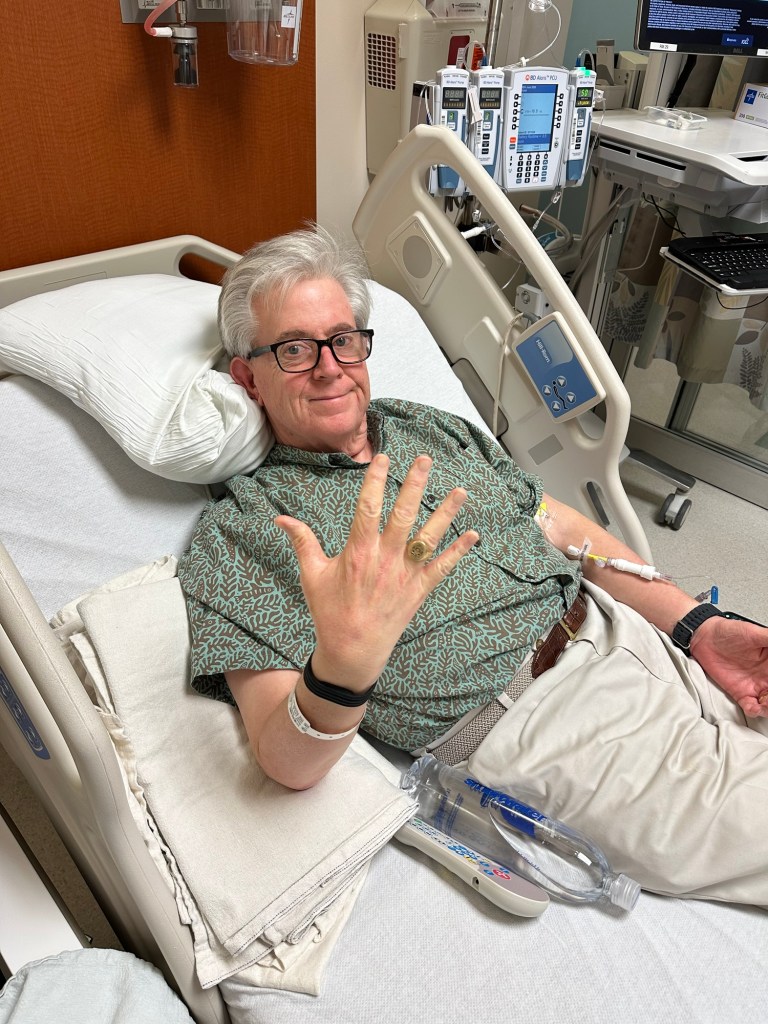
Today was mogamulizumab infusion number five—the last of the weekly treatments before the schedule changes to every other week.
The most encouraging part of today was how pleased my doctors seemed with what they are seeing.
The red bump on my back that appeared last week is gone. The other bumps are flatter. My rash continues to improve. At one point my doctor looked at the areas we had been following and said, simply, “They’re gone. A plus.”
Later she told me, “You look amazing.”
Those are pretty good words to hear in an oncology clinic.
I feel good overall, although I am somewhat tired. The diarrhea we have been watching is also considerably better—probably about 50 percent improved. I am now going roughly once to one-and-a-half times a day, and more than half the time there is at least some form to it.
There was one laboratory number I wanted to understand better. My platelet count has fallen again, this time to 132,000/µL. My doctor thinks this may reflect an immunologic reaction associated with my body lysing cancer cells, along with the effects of the large dose of steroids I received during the hospitalization gradually wearing off. She emphasized that we will keep watching it.
One particularly reassuring laboratory result was my LDH. Her description was memorable: “Your LDH is stone cold normal now.”
For now, the plan is simply to keep an eye on the blood counts and let the team know if anything changes.
I also asked about some mild neuropathy I have been noticing in my toes and the balls of my feet. My doctor said that is not typical of MOGA and that she would not expect it from the drug, particularly this early in treatment.
Another practical question was when—or whether—to restart Zepbound. I have been off it since before beginning MOGA. My endocrinologist suggested restarting at the lower 2.5 mg dose, but my oncology team wants me to wait until the next blood work. If everything remains stable, we can reconsider it then. The idea is not to change too many variables at once, especially with a couple of trips coming up.
We also revisited the timing of the next PET scan. I had seen January somewhere in the schedule, but that did not fit with my memory that we wanted to reassess after roughly three months of treatment. The plan now sounds much more like November, probably later in the month—about three months after starting MOGA—to see what is happening not only in the blood and skin but also in the lymph nodes and deeper areas of disease.
That brings me back to the question that is never very far away: stem-cell transplant.
I told my doctor that my mood is generally good, but I do have periods when the transplant decision weighs heavily on me. The choice can feel brutally stark when I let myself think too far ahead: do I accept the substantial risks of transplant, or the risks of living with Sézary syndrome without pursuing the one treatment that might cure it?
What my doctor said today helped.
We are continuing the transplant workup so that the option is available if and when we need it. But she does not think I need to make that decision today. We do not yet have all the data points. The three-month assessment should tell us much more about how completely MOGA is controlling the disease, including the disease outside the bloodstream.
So I can keep preparing without pretending I already know what I will decide.
That seems like a healthier place to leave the question for now.
Today also marks a small milestone. I have now finished the five weekly MOGA treatments. Assuming things continue as planned, I return in two weeks and begin the every-other-week schedule.
Five treatments ago, I was just beginning this drug without knowing how my disease—or my body—would respond. The first treatment landed me in the hospital. Since then, the infusions themselves have become almost routine, the malignant cells in my blood have fallen dramatically, my skin has improved, and the bumps we were watching are disappearing.
There are still important questions ahead, particularly what the PET scan will show and what I ultimately decide about transplant.
But today my doctor looked at the physical evidence of where we are and gave it a grade.
A plus.
I’ll take it.
September 29, 2026 — Marching Firmly in the Right Direction
I had another treatment and follow-up visit on September 29, and for the first time in a while, I came away feeling like the picture is becoming a little clearer.
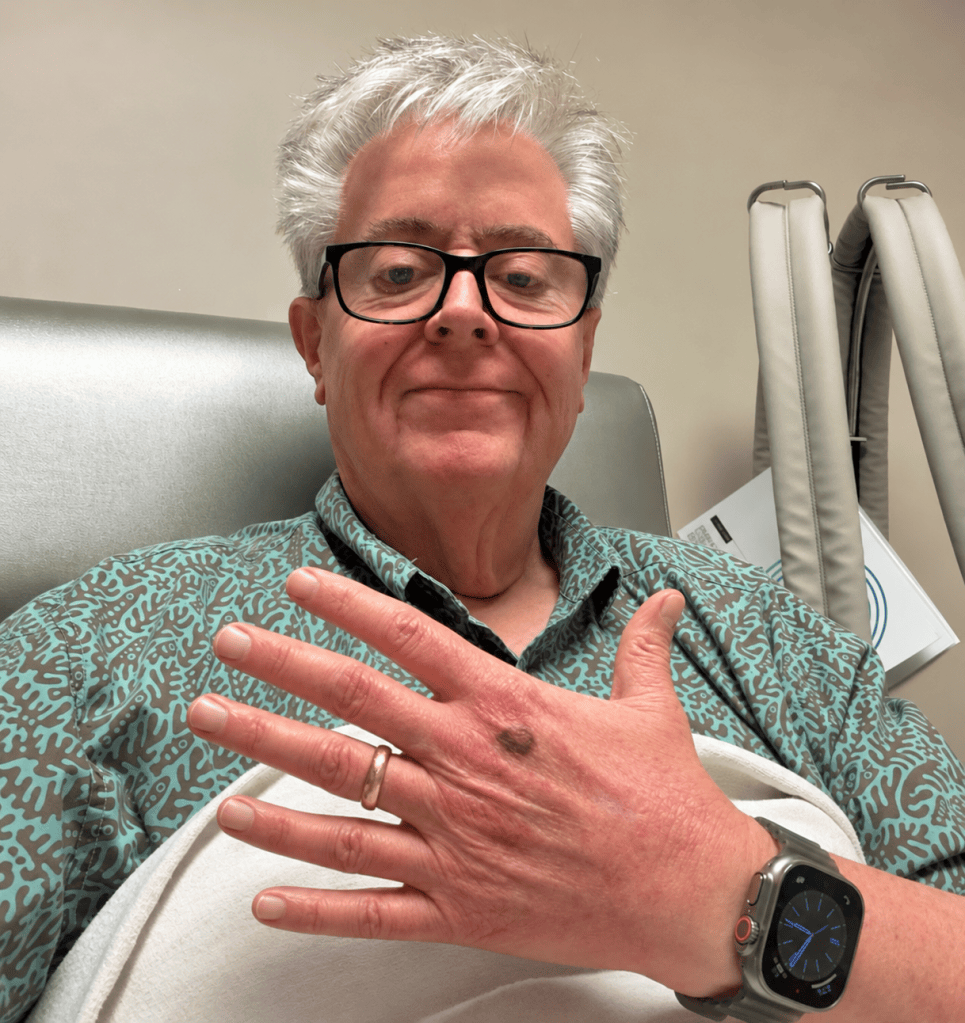
The best news is that the treatment appears to be working.
My oncologist examined my skin and was very encouraged by what she saw, especially compared with where I started. At one point she looked at my back and said the improvement was “night and day.” She also told me that I looked fantastic, which is always nice to hear from your oncologist.
She was careful not to get ahead of things. My skin is not completely clear yet, and she said that I am not in remission at the moment, but I am “marching firmly in that direction.”
I think that is probably the best description of where things stand right now.
One interesting thing they have noticed is that the areas of my body that are normally uncovered seem to be improving more than the areas that stay covered. Because of that, they want me to get about 15 to 20 minutes of sun on my chest, back and legs twice a week. Apparently, a little controlled exposure may help the skin response, so I now have what may be the easiest assignment I have received from my medical team so far.
I have now completed six infusions of mogamulizumab and am about seven weeks into treatment. My blood work continues to look reasonably good. My white blood cell count has improved somewhat, my hemoglobin is holding fairly steady, my platelets are acceptable, and my liver and kidney function look good.
More importantly, I feel pretty good.
My energy has improved. I have been getting up earlier in the mornings, eating well — perhaps a little too well — and generally feeling more like myself. I recently spent a weekend with some longtime friends and am getting ready to spend a week in Colorado. A few months ago, I was not sure how much of that I would feel like doing.
There are still some skin issues that are not completely resolved. I have a stubborn area on my abdomen that I have thought might be fungal. My doctors are not convinced, and it may simply be another part of the underlying skin disease or the way my skin is changing as treatment works. For now, it is not particularly uncomfortable, and nobody seems especially concerned about it.
The bigger development is that the stem cell transplant process is starting to become much more real.
The transplant team called and told me they have identified a potential 9-out-of-10 donor match. They had previously identified a 10-out-of-10 match, but that donor was no longer available after being contacted. They are continuing to look for backup possibilities, but having a potentially usable donor is an important step.
I have a meeting scheduled with the transplant physician on October 14. I expect that conversation to answer many of the questions I still have about timing, donor selection, risks, radiation treatment beforehand, and what needs to happen before we would actually proceed with a transplant.
I have certainly not lost my concerns about a stem cell transplant. It remains a very serious treatment with very serious risks. But as I told my doctors, I am beginning to accept that it may be the path I ultimately need to take unless there is a better alternative.
For now, though, there is no reason to get too far ahead of myself.
The immediate goal is to keep responding to the treatment I am receiving now. We should repeat imaging in roughly another month, and that will tell us much more about what is happening beneath the skin — in the lymph nodes and the other areas that showed disease before treatment began.
So I am trying to take this one step at a time.
I am not in remission yet.
I am not finished with treatment.
There is still more progress to be made, and there are still some very big decisions ahead.
But after several months of uncertainty, it feels good to be able to say that things are moving in the right direction.
As my oncologist put it, I am “marching firmly in that direction.”
For now, I will take that.
October 1, 2026 — Another Hurdle Cleared
I’ve had a couple of encouraging developments over the past few days as the possibility of a stem cell transplant begins to feel a little less theoretical and a little more real.

Earlier this week, I received a call from the donor-search specialist at MD Anderson who is working on my case. The search is being conducted through a worldwide donor registry, and so far they have identified one likely unrelated donor who is a 9-out-of-10 match for me.
They had previously identified a 10-out-of-10 match, but when that person was contacted, they decided not to proceed with the donation. That is, of course, entirely their decision to make. The search team is continuing to look worldwide for other 10-out-of-10 matches while also identifying backup donors in case something happens with the current 9-out-of-10 candidate.
So nothing is final on the donor side yet, but knowing that a promising candidate has already been identified is very encouraging.
Then today I received another piece of good news: Cigna has formally approved MD Anderson’s request for an unrelated-donor allogeneic stem cell transplant.
That does not mean the transplant is happening anytime soon, or that a date has been set. I still need to continue responding to treatment, reach the point where my doctors believe I am ready, and complete a number of other steps before a transplant can take place. On the current schedule, the earliest I would expect the transplant to occur would be sometime in late spring or early summer of 2027.
But this is a significant hurdle to have cleared. A transplant and all of the medical care surrounding it can potentially cost $1 million or more, so this is not just another routine insurance authorization. It could ultimately represent a seven-figure benefit decision.
There is another reason the approval is particularly meaningful to me. I have been strongly advised to maintain the private insurance coverage I have through my wife. My understanding is that if I were relying solely on Medicare, coverage for this particular transplant in Texas could be a problem, and I might have to travel to another state where different Medicare coverage rules apply. That makes having Cigna’s authorization in place especially important.
Coming just a few days after my oncologist told me that I am “marching firmly” toward remission, it feels as though several pieces of this very complicated puzzle are beginning to move into place.
There is still a long road ahead. I have to get into remission, the donor situation has to be finalized, and there are many other medical steps before transplant. But this week brought two pieces of genuinely encouraging news: a likely donor has been identified, and the insurance authorization is in place.
For now, I’m very happy to put a check mark next to those.
Related: Transplant | Treatment Timeline | ↑ Back to Top

